John Orley Allen Tate (November 19, 1899 – February 9, 1979) was an American poet, essayist, social commentator, and Poet Laureate Consultant in Poetry to the Library of Congress from 1943 to 1944. Read full biography of Allen Tate →
How does one happen to write a poem: where does it come from? That is the question asked by the psychologists or the geneticists of poetry.
Dramatic experience is not logical; it may be subdued to the kind of coherence that we indicate when we speak, in criticism, of form.
But in our age the appeal to authority is weak, and I am of my age.
Other psychological theories say a good deal about compensation.
Poets, in their way, are practical men; they are interested in results.
Religion is the sole technique for the validating of values.
The only real evidence that any critic may bring before his gaze is the finished poem.
The Spring I seek is in a new face only.
We know the particular poem, not what it says that we can restate.
What is the poem, after it is written? That is the question. Not where it came from or why.
A poem may be an instance of morality, of social conditions, of psychological history; it may instance all its qualities, but never one of them... →
At twelve I was determined to shoot only For honor; at twenty not to shoot at all; I know at thirty-three that one must shoot As often as one gets... →
There is probably nothing wrong with art for art's sake if we take the phrase seriously, and not take it to mean the kind of poetry written in... →
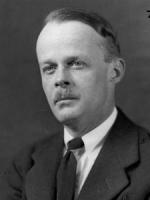 John Orley Allen Tate (November 19, 1899 – February 9, 1979) was an American poet, essayist, social commentator, and Poet Laureate Consultant in Poetry to the Library of Congress from 1943 to 1944.