Walter Horatio Pater (4 August 1839 – 30 July 1894) was an English essayist, literary and art critic, and writer of fiction. Read full biography of Walter Pater →
The service of philosophy, of speculative culture, towards the human spirit, is to rouse, to startle it to a life of constant and eager observation.
Philosophical theories or ideas, as points of view, instruments of criticism, may help us to gather up what might otherwise pass unregarded by us.
In a sense it might even be said that our failure is to form habits: for, after all, habit is relative to a stereotyped world, and meantime it is... →
Not the fruit of experience, but experience itself, is the end.
Experience, already reduced to a group of impressions, is ringed round for each one of us by that thick wall of personality through which no real... →
Art comes to you proposing frankly to give nothing but the highest quality to your moments as they pass.
A very intimate sense of the expressiveness of outward things, which ponders, listens, penetrates, where the earlier, less developed consciousness... →
And the fifteenth century was an impassioned age, so ardent and serious in its pursuit of art that it consecrated everything with which art had to ad... →
Great passions may give us a quickened sense of life, ecstasy and sorrow of love, the various forms of enthusiastic activity, disinterested or... →
Many attempts have been made by writers on art and poetry to define beauty in the abstract, to express it in the most general terms, to find some... →
That sense of a life in natural objects, which in most poetry is but a rhetorical artifice, was, then, in Wordsworth the assertion of what was for... →
To regard all things and principles of things as inconstant modes or fashions has more and more become the tendency of modern thought.
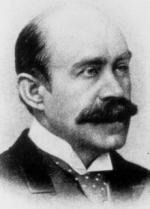 Walter Horatio Pater (4 August 1839 – 30 July 1894) was an English essayist, literary and art critic, and writer of fiction.